Masters Thesis
Georgia Institute of Technology
December 2015
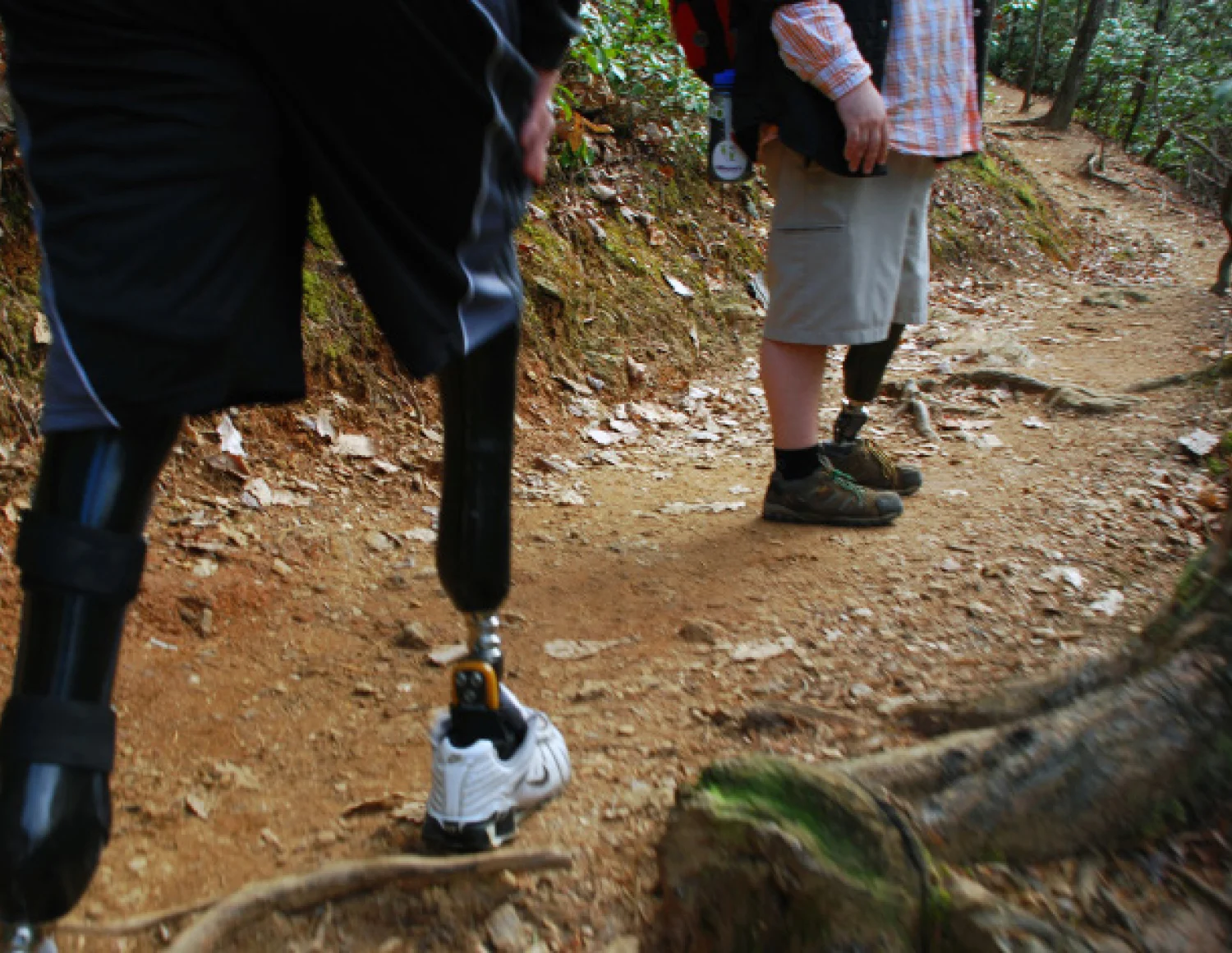
Aiding Lower-limb Amputees in Traversing Uneven Terrain Through Product Design
Most lower-limb amputees in the US today did not become amputees due to a congenital disease or a traumatic occurrence in their life. The leading cause of lower-limb amputations is due to diabetes and more specifically, Type 2 diabetes. Type 2 diabetes usually occurs in over-weight, middle-aged adults who lead a sedentary lifestyle and maintain a high-calorie diet. For some Type 2 diabetics, an amputation is an unfortunate result of the life-style they chose to lead. However, for many, an amputation becomes a wake-up call of sorts and makes them realize they must make drastic changes in their lives if they want to continue living them. Despite the fact that they want to change their lifestyle, this is something that is easier said than done.
Activities such as running, bicycling, rock climbing, or golfing usually require a specialized prosthesis or accessory in order to perform that task. However, there is one large barrier that can stand in the patient’s way of performing that task. The main barrier these patients face is cost. Many patients rely solely on Medicare or
Medicaid to cover the costs of the prosthesis, which is only $2,500 to $5,000. This means that despite the fact these patients wish to better themselves and their lives by becoming more active, they cannot because they cannot afford the specialized equipment needed to perform those activities. A solution must be discovered in order to solve the issue of high costs for prosthetic devices that will allow lower-limb amputees to perform the activities they wish to perform.
This thesis aims to add to the current state of knowledge concerning lower-limb amputees and the activities they wish to perform, identifying the barriers that keep them from performing an activity, and designing a low-cost device that allows them to better perform an activity.